
Vacant home insurance Iowa requirements are one of the first surprises out-of-state heirs run into after inheriting Iowa real estate from out of state in Des Moines, Cedar Rapids, or anywhere across the state. Standard homeowners policies were written for owner-occupied homes — once a property sits empty for 30 to 60 days, most carriers either limit coverage drastically or void the policy entirely. By the time an executor finds out, the home has often been vacant for weeks, sometimes months, while probate works its way through Iowa District Court. This guide walks through five coverage gaps that catch heirs off guard, what questions to ask three licensed Iowa producers, and where vacant-home policies fit into the broader probate timeline.
This article is a practical risk-prevention guide for Iowa executors, adult children, and out-of-state heirs managing an inherited property. It covers what the vacancy clause triggers, what a vacant property policy actually covers, how Iowa probate timing creates extended exposure, and the specific steps that reduce your financial risk while the house sits empty.
If you want to talk through the insurance and real estate risks on a specific Des Moines-area property before listing it, you can reach Sarah Ingles, REALTOR, SRES, CPCU, at (563) 513-8771 or at smartmovedsm.com. She works directly with executors and families across Polk, Dallas, and Warren Counties and brings 10-plus years of property insurance experience to every property evaluation.

When Standard Homeowners Coverage Stops Working
Standard homeowners policies are written for occupied homes. Once a property sits empty, carriers treat the risk profile as fundamentally different, and the policy language reflects that. The vacancy clause is not a technicality buried in the fine print; it is a core coverage condition that most Iowa families do not discover until after a claim is denied.
Why Inherited Homes Trigger Coverage Gaps Fast
When a homeowner dies, the policy does not automatically transfer to the estate or the heirs. According to guidance on homeowners insurance after death, the estate executor is responsible for maintaining coverage and paying premiums during probate. If no one contacts the carrier, the original policy may lapse entirely once the named insured is deceased and the premium goes unpaid.
Even if the policy stays active for a period, vacancy changes what it covers. A house cleared of furniture and personal property to prepare for sale is considered vacant by most carriers, not simply unoccupied. That distinction matters enormously for claims.
How Iowa Vacancy Timelines Commonly Affect Estate Property
Most Iowa carriers restrict or void coverage after 30 to 60 consecutive days of vacancy, depending on the policy language. Iowa probate under Chapter 633 typically takes a minimum of four to six months for a straightforward estate. In Polk County, Letters Testamentary or Letters of Administration are generally issued 30 to 60 days after the petition is filed, which means the property may already be approaching the vacancy threshold before the executor even has legal authority to list it.
Supervised administration, which requires court approval before accepting a sale offer, adds another 30 to 60 days. A property that sat vacant for three months while probate worked through the court system could be completely uninsured when a burst pipe, storm, or break-in occurs.
Vacant Vs. Unoccupied: Why The Difference Matters
These two terms are not interchangeable in insurance policy language, and the distinction affects your coverage significantly. An unoccupied home still contains furniture and personal belongings; the owner is simply away temporarily. A vacant home is empty of both people and the personal property needed for daily living, with no clear intent for anyone to move in soon.
Most standard policies treat unoccupied properties more generously than vacant ones. Once a home crosses into vacancy, carriers narrow the covered perils, raise deductibles, or exclude coverage for vandalism entirely. As noted by homeowners insurance vacancy research, standard policies often exclude vandalism specifically when the property is vacant without proper coverage in place.
What To Do In The First 48 Hours After Death
The actions you take in the first two days after a homeowner’s death determine whether the property remains insured during the months that follow. The three most urgent steps address the insurance carrier, the physical property, and the utility accounts. These tasks do not require Letters Testamentary; they can and should happen before the probate petition is even filed.
Notify The Insurance Carrier Immediately
Contact the carrier on day one. Inform them that the named insured has died and that the property will be vacant. Ask specifically about the policy’s vacancy clause, when coverage restrictions take effect, and what options exist to extend or convert coverage. Coverage should remain in place until ownership is legally transferred or the property is sold, but standard policy terms may not allow that without a policy change or conversion.
Many Iowa carriers will switch an estate property to a dwelling fire policy or a vacant property endorsement. Ask about both options and get confirmation in writing. Verbal assurances from a carrier are not binding at claim time.
Secure The Property And Document Condition
Change the locks if the existing keys have been distributed broadly or if the decedent used a property manager, home health aide, or other service provider with access. A full photographic and video walkthrough of every room creates a documented baseline for any future insurance or legal claim.
Note existing damage: roof condition, water stains on ceilings, condition of the electrical panel, and any signs of prior water intrusion. This documentation also supports your Iowa Code Chapter 633 inventory obligation. Under Iowa Code section 633.361, the executor must file an estate inventory within 90 days after appointment (unless the court grants additional time), and that inventory includes the personal property in the home along with other estate assets.
Keep Utilities On To Reduce Loss Risk
Do not shut off the heat, water, or electricity. A failed furnace during an Iowa winter can freeze and burst the supply lines throughout the house in a matter of hours. Water damage of that type is expensive, often exceeds $20,000 to $50,000 in repair costs, and may not be covered if the carrier determines the property was uninsured as vacant at the time of loss.
Keep the thermostat set to at least 55 degrees Fahrenheit year-round until the property is sold or transferred. Maintaining utilities is a low cost compared to a denied claim for water damage, and some carriers require active utilities as a condition of maintaining any coverage on a vacant property.
Which Policy Fits The Property’s Next Use
The right policy depends on how long the property will sit vacant, what condition it is in, and what happens to it after the estate closes. There is no single best answer, but the decision framework is straightforward: match the policy type to the property’s actual use and timeline.
When A Vacant Property Policy Makes Sense
A standalone vacant property policy is the right move when the home will be empty for more than 60 days, the estate expects a protracted probate timeline, or the property has already been cleared of personal belongings. These policies are purpose-built for the elevated risk profile of unoccupied structures and provide coverage for perils that standard policies restrict once vacancy is triggered.
Executors managing Iowa probate properties should treat a vacant property policy as a default, not a fallback. The cost is higher than standard coverage, but the alternative is an uninsured loss that the estate is personally responsible for covering.
When An Endorsement May Be Enough
If the existing policy is still active and the carrier is willing to add a vacancy endorsement, that approach may be sufficient for a shorter gap, typically when the property will be listed and under contract within 60 to 90 days. An endorsement modifies the existing policy rather than replacing it, which can be faster to arrange.
Be specific with the carrier about the timeline. If probate delays push the vacancy beyond what the endorsement covers, the executor needs to know that in advance. Leaving a vacant home under the wrong policy structure can cost thousands in denied claims.
When To Switch To Landlord Or Owner-Occupied Coverage
If an heir plans to move into the property as a primary residence, a standard HO-3 or HO-5 policy becomes appropriate once they occupy it. If the plan is to rent the property rather than sell, a landlord policy or dwelling fire policy with tenant liability coverage is the correct product.
Do not allow the policy type to lag behind the actual use of the property. Each transition, from vacant to occupied, or from estate-owned to heir-owned, is a material change that the carrier must be informed of to maintain valid coverage.
A third related option, builder’s risk insurance, is designed for properties undergoing significant renovation between probate and sale — it covers the structure and materials during active construction, where a standard or vacant policy may exclude renovation work.
What Iowa Vacant Home Insurance Covers
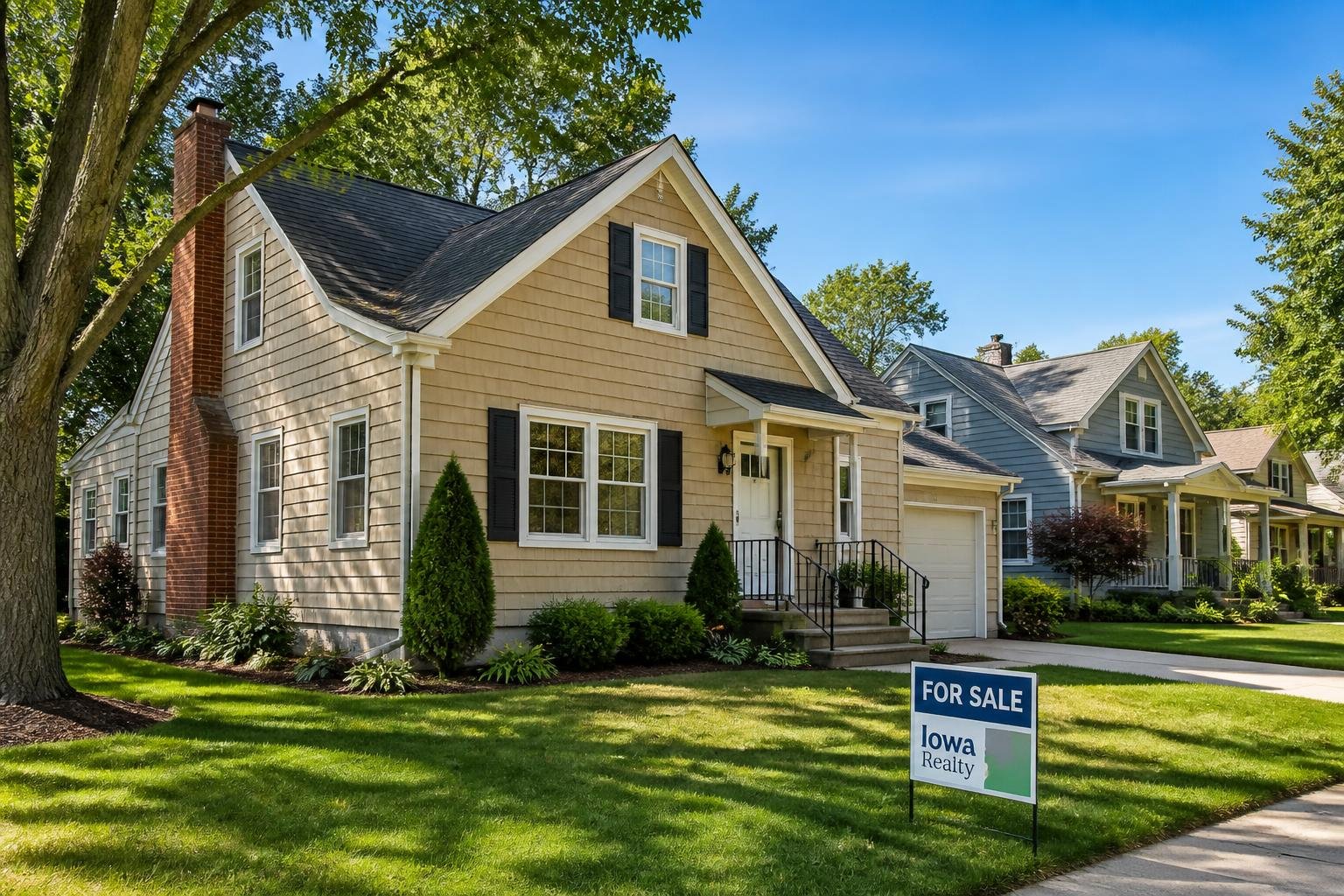
Vacant property policies are typically written on a named peril basis, which covers only the specific losses listed in the policy. This contrasts with the broader open peril coverage of a standard HO-3, which protects against all causes of loss unless specifically excluded—a critical distinction for an executor managing estate risks. Knowing what is and is not covered before a loss occurs prevents the kind of surprise that derails an estate sale.
Dwelling Damage From Fire, Wind, Hail, And Theft
Most vacant property policies provide peril coverage for fire, windstorm, hail, lightning, and theft as named perils. These forms of property damage are the losses most likely to occur on an unoccupied Iowa property during a typical probate window. Iowa experiences significant hail seasons, and an unoccupied home sustaining roof damage that goes unnoticed for weeks will compound in severity.
Vacant home insurance may cover specified risks including fire, flooding, wind, hail, and theft, and may also cover the cost of repairing or replacing the home if it is damaged or destroyed. Confirm that replacement cost coverage, not only actual cash value, is available and select it if the carrier offers it.
Water Losses, Vandalism, And Other Common Estate Risks
Peril coverage for water damage on vacant properties is often limited to “sudden and accidental” events, such as a frozen pipe bursting, and typically excludes long-term leaks or maintenance failures. Vacant home policies often still include protection for sudden and accidental events, but the definition of “sudden” is applied strictly.
Vandalism and malicious mischief coverage is frequently excluded from standard policies once a home is vacant, but a purpose-built vacant property policy often restores it. This matters for Iowa estate properties, particularly in neighborhoods where a visibly empty home attracts break-ins.
Liability Exposure For Contractors, Visitors, And Trespassers
Liability coverage on a vacant property policy protects the estate if someone is injured on the premises. This includes licensed contractors, family members coming to collect belongings, and in some cases, trespassers. A vacant policy may cover liability claims including bodily injury or damage to someone else’s property.
Executors should confirm the liability limit on any vacant property policy and make sure it is adequate for the property size and condition. An estate with a deferred roof repair, a cracked sidewalk, or an aging deck carries more slip-and-fall exposure than a well-maintained property.
Cost, Claim Limits, And Common Restrictions
Vacant property coverage costs more than standard homeowners insurance. That is not a negotiable reality; it reflects the fact that unoccupied properties generate more claims. The practical question for an executor is how to budget for that cost while also making the property sale-ready.
How Much More Vacant Coverage Usually Costs
Vacant home insurance averages approximately $4,202 annually in 2026, compared to a standard homeowners average of around $2,801, representing a 50 to 60 percent premium increase. Vacant properties are also statistically about three times more likely to experience vandalism than occupied homes.
The cost is a legitimate estate expense and should be accounted for in the executor’s financial management of the estate. Do not let the higher premium create a temptation to leave the property uninsured or to delay switching policies.
Actual Cash Value Vs. Replacement Cost
Many vacant property policies default to actual cash value (ACV) coverage rather than replacement cost value (RCV). ACV pays the depreciated value of a damaged item or structure, while RCV pays what it would cost to replace it with new materials at today’s prices.
The difference matters most on Iowa properties with older roofs. A 12-year-old roof that sustains hail damage may have an ACV of 40 to 50 percent of replacement cost, leaving the estate responsible for the rest. IMT Mutual, one of Iowa’s largest carriers, shifted to ACV coverage on any roof over six years old beginning in 2024, which dramatically increased out-of-pocket costs for storm claims on older roofs across the state.
Why Older Roofs, Wiring, And Claims History Matter
Three property conditions will restrict your coverage options, raise your premiums, or trigger outright denial from most Iowa carriers:
- Roof age: Most Iowa carriers will not write a new policy on a roof over 20 years old. Many will not renew at 20 years either.
- Electrical panels: Federal Pacific panels, common in Iowa homes built between the 1950s and 1980s, are an automatic decline with most carriers. Knob-and-tube wiring in pre-1950 homes carries the same result.
- CLUE report history: A property with multiple claims in the past five to seven years will face higher premiums or a denial. Executors should request a free CLUE report through LexisNexis before approaching any carrier, not after. The claims history belongs to the property, not the person, and it follows the address.
If the property has any of these conditions, the Iowa FAIR Plan may become the coverage option of last resort. It carries higher premiums and narrower coverage, but it keeps the property insured while the estate works toward a sale.
Iowa Probate Timing And Real Estate Risks
Iowa probate timelines under Chapter 633 are long by design. The law builds in creditor notice periods, inventory deadlines, and in supervised estates, court approval requirements at each major step. For executors managing inherited property, that timeline almost always outlasts the vacancy allowance built into a standard insurance policy.
Why Probate Often Outlasts Basic Vacancy Allowances
A standard Iowa probate in Polk County moves on roughly this schedule: the petition is filed, a hearing is set, and Letters Testamentary or Letters of Administration are issued somewhere in the 30- to 60-day window after death. The executor then has 90 days from appointment to file the estate inventory (unless the court extends the deadline). For general (unknown) creditors, Iowa’s probate claim period runs four months from the date of the second published notice to creditors — though known creditors who receive direct mailed notice may have shorter deadlines (typically 30 days from mailing). Iowa Medicaid is a special creditor whose estate recovery process operates separately and, in practice, can extend a year to 15 months from death and notice before the estate is fully cleared.
Add those timelines together and a sale that closes in month six is actually fast. Properties tied up in supervised administration, contested estates, or multi-heir disagreements routinely run 12 months or more. A well-priced Des Moines-area estate property typically goes under contract in 20 to 30 days in the current market, but that 20 to 30 days only starts once the executor is legally authorized to list and market the property. The insurance exposure begins the day the homeowner dies.
Letters Testamentary, Listing Timing, And Sale Delays
The executor cannot sign a listing agreement until Letters Testamentary or Letters of Administration are in hand. Attempting to list earlier creates a title and legal problem, not just an insurance one. For independent administration, the executor can accept an offer and proceed to closing without court approval at each step. For supervised administration, a court petition to approve the sale adds another 30 to 60 days to the timeline.
All of that time, the property sits vacant and the coverage clock is running. Vacancy clauses typically trigger at 30 to 60 days, which means standard coverage may already be compromised before the executor has legal authority to do anything about the property’s sale.
How Out-Of-State Heirs Can Reduce Insurance Problems
Out-of-state heirs managing an Iowa estate property are the most likely group to miss early insurance steps because they are not physically present and may not realize how quickly coverage restrictions take effect. A few practical measures significantly reduce that risk:
- Designate a local point of contact, whether a trusted neighbor, a property manager, or a local real estate professional with estate experience, to perform regular walkthroughs and respond to property conditions quickly.
- Set up automatic premium payments so the policy does not lapse due to a missed bill at a Des Moines address.
- Request that the carrier or new vacant-property insurer send policy documents and renewal notices to the executor’s out-of-state address.
Working with someone local who understands both Iowa probate timing and property insurance conditions can prevent the coverage gaps that most out-of-state heirs do not discover until after a claim is filed and denied.
Practical Steps To Reduce Loss While The House Sits Empty
Keeping insurance in place addresses the financial side of vacancy risk. Keeping the property maintained addresses the physical side. The two work together: a well-maintained vacant property produces fewer claims, fewer claim denials, and a better outcome when it finally hits the market.
Routine Check-Ins, Lawn Care, And Exterior Maintenance
Schedule in-person property checks at least every seven to ten days. Most vacant property policies require regular inspections, and some carriers specify the minimum frequency in the policy language. Missing the inspection requirement can void a claim as surely as missing the vacancy notification.
Exterior maintenance serves a dual purpose. A mowed lawn, cleared mailbox, and maintained appearance reduces the visual signs of vacancy that attract vandals and thieves. It also preserves curb appeal for when the property goes to market. Deferred exterior maintenance compounds quickly and creates disclosure and negotiation problems that affect sale price.
Contractor Access, Slip-And-Fall Risk, And Liability Control
Before any contractor enters the property, confirm that your vacant property policy’s liability coverage extends to authorized third parties. Most do, but it is worth verifying explicitly. Keep a written log of every contractor visit, including date, purpose, and the contractor’s license and insurance information.
Address obvious hazards before the property is shown to buyers or visited by family members. Slip-and-fall liability on vacant estate properties is a real exposure, particularly when driveways are icy, steps are loose, or decks have deferred maintenance. These are also the kinds of conditions that affect insurability and buyer financing.
Preparing The Home For Sale Without Creating New Exposure
Some pre-listing repairs and improvements can actually create new insurance exposure if they are not done correctly. Partial renovations, open walls, removed fixtures, and unlicensed work can raise questions with both insurers and buyers. Stick to finished, permitted work done by licensed Iowa contractors who carry their own liability insurance.
Before listing, pull the property’s CLUE report and review its claims history. Multiple claims in the past five to seven years will affect the buyer’s ability to obtain affordable insurance, which directly affects their financing. Identifying that issue before listing, rather than at the buyer’s inspection or appraisal, gives the estate the best chance of reaching a clean closing without last-minute price concessions. Working with a real estate agent experienced in Iowa probate property sales helps ensure the home is properly positioned before it hits the market.
Document everything the executor does to the property: repairs completed, inspections passed, utilities maintained, and security measures installed. That documentation supports the estate’s due diligence, reduces liability exposure, and provides a clear record for the probate court’s final report.
Smart Move Des Moines alsho publishes a free 6-page resource: The Insurance Gap That Costs Iowa Heirs $1,200–$3,500 in the First 60 Days. The guide breaks down the 30/60/90-day timeline, an executor checklist for the first month, and the carrier-by-carrier differences for vacant inherited Iowa property. Download at smartmovedsm.com/iowa-inherited-house-insurance-gap.
About Sarah Ingles
Sarah Ingles is a REALTOR®, Seniors Real Estate Specialist (SRES®), and Chartered Property Casualty Underwriter (CPCU®) who founded Smart Move Des Moines, brokered by Fathom Realty. With over 10 years of property insurance expertise, Sarah helps families across the Des Moines metro navigate the emotional and logistical details of selling a parent’s home, handling estate and probate properties, and coordinating senior transitions with patience and clarity.
🗓️Book a Consultation: https://smartmovedsm.com/book
📞Call or Text: 563-513-8771
📧Email: sarah@smartmovedsm.com
Serving Urbandale, West Des Moines, Waukee, Ankeny, Johnston, Grimes, and the greater Des Moines metro. See what families say about working with Smart Move Des Moines →
Brokered by Fathom Realty | Iowa License #S73007000 | Equal Housing Opportunity